Why Does Isaac Keep Walking Away from His Wells?
Genesis 26, Contested Water, and a Promise Not Secured by Force
 |
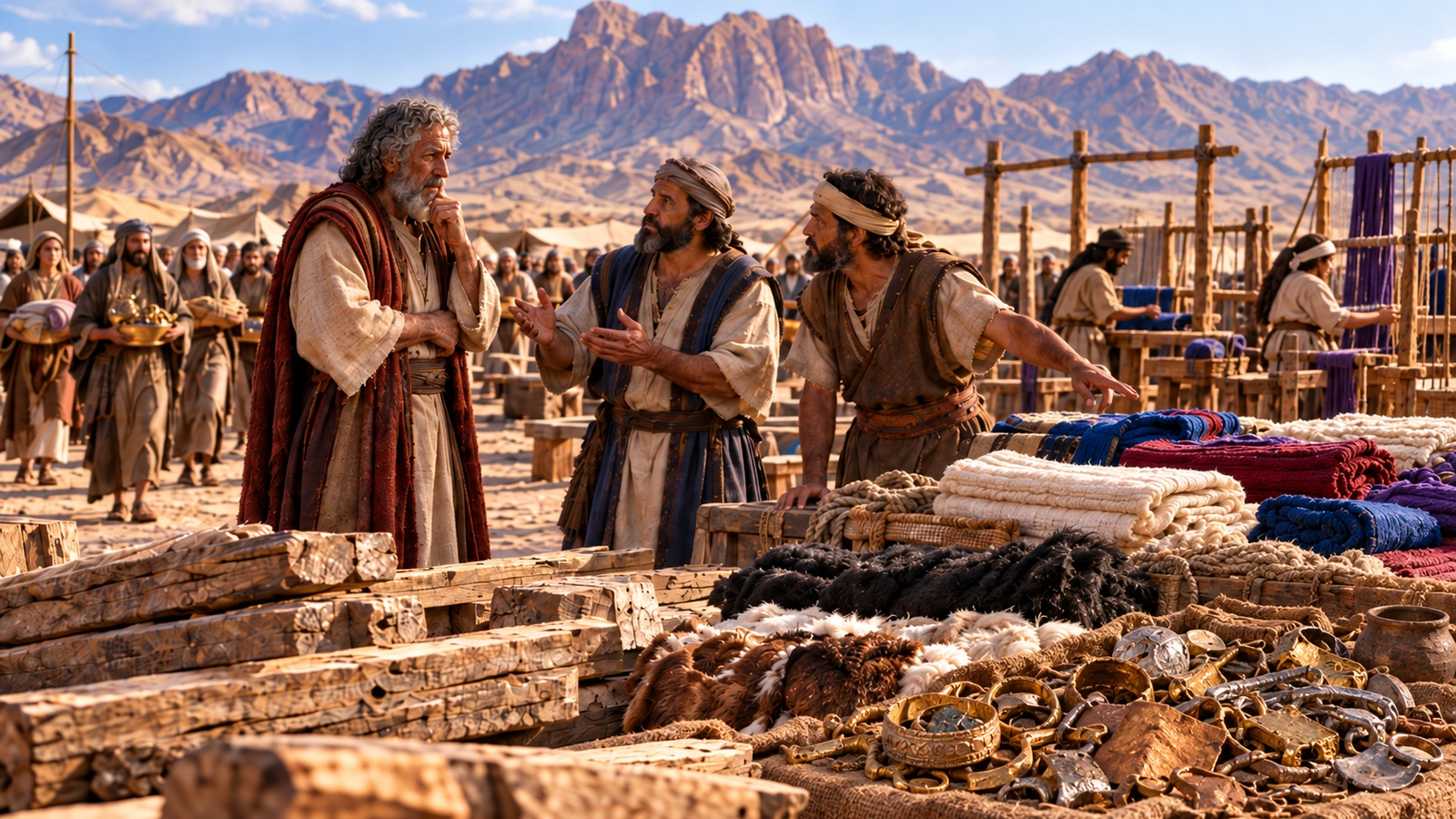
Figure 1. Artistic reconstruction of Isaac leaving a disputed well while local herdsmen remain near the water source, representing the repeated pattern of withdrawal, relocation, and renewed settlement in Genesis 26. |
Genesis 25 narrowed the ancestral account toward Isaac’s household. That shift was examined in Why Does Genesis Always Finish One Family Before Following Another?.
Chapter 26 now tests what that new focus means on disputed ground. Famine, prosperity, expulsion, water claims, and diplomacy shape the episode.
The central puzzle concerns repeated relinquishment, not simply ancient wells. Why does their owner abandon contested sites instead of defending them?
No private motive is recorded. What survives is a sequence: opposition, withdrawal, fresh excavation, spaciousness, reassurance, and peace.
A Command to Remain Comes Before the Disputes
A famine sends Abraham’s son toward Gerar. Before he can continue southward, YHWH interrupts the journey.
The instruction is direct: “Do not go down to Egypt.” Residence must follow divine direction.
Land commitments come next. Offspring, territory, and blessing echo assurances previously given to his father.
Nothing in the speech authorizes conquest. Emphasis falls on sojourning within a region assigned through prior assurance.
A wife-sister deception follows, repeating an uncomfortable ancestral pattern. Abimelech discovers Rebekah’s identity and protects the marriage from interference.
That episode ends quickly. Agricultural success then creates the social pressure driving the second half.
Prosperity Produces Expulsion
The patriarch sows and receives an extraordinary harvest. Flocks, herds, and servants expand until local envy becomes explicit.
Older shafts associated with his father are stopped with earth. Abimelech then orders the prosperous outsider away.
This expulsion changes the geography. He settles in the valley and reopens earlier installations.
Their former names return as well. The act reconnects present occupation with remembered family presence.
A newly excavated source produces fresh confrontation. Gerar’s herdsmen claim, “The water is ours.”
Three Names Interpret Three Stages
The first disputed site receives עֵשֶׂק — ʿēśeq. Its name corresponds with the contention described there.
Rather than retaliating, the household shifts again. Another excavation soon encounters stronger resistance.
That second location becomes שִׂטְנָה — śiṭnâ. English versions commonly render it “opposition” or “hostility.”
A further relocation finally changes the pattern. No rival group contests the next successful discovery.
He calls it רְחֹבוֹת — rəḥōḇôṯ, associated with breadth or spaciousness. His own explanation supplies the interpretation.
“Now YHWH has made room for us,” he says. Fruitfulness can proceed without immediate struggle over access.
The Hebrew Wordplay Tracks the Movement
These place-names function as compressed commentary. Each label converts an encounter into remembered geography.
Esek preserves contention; Sitnah intensifies resistance. Neither designation is accompanied by military reprisal.
Rehoboth marks a different condition. The root רחב — r-ḥ-b concerns width, enlargement, or making room.
That lexical shift matches the plot’s widening. Scarcity and rivalry give way to an uncontested location.
The narrator still withholds psychological explanation. Those labels provide much of the interpretation instead.
The Water Disputes Also Recall Abraham
Earlier, chapter 21 placed the father in conflict with Abimelech over a well. That confrontation ended with an oath and seven ewe lambs marking his claim.
The present episode reactivates that memory differently. Paternal servants had dug those shafts; the son reopens them and preserves their names.
Later, the same royal title returns with Phicol near Beersheba. A treaty again closes tension between immigrant household and local authority.
These parallels do not make both episodes identical. They show continuity through inherited places, recurring opponents, and negotiated coexistence.
Why Water Was Worth Fighting Over
Reliable supply sustained households, livestock, cultivation, and seasonal mobility. Control over infrastructure carried serious economic consequences.
Old Babylonian legal traditions also regulate damage involving shared irrigation systems. Those provisions concern canals rather than these particular installations.
The comparison must remain limited. It shows that water management could become a communal dispute.
Victor H. Matthews examined Gerar’s wells through broader ancient and pastoral analogies. His study treats access as socially significant, not decorative background.
A recent ecological reading likewise emphasizes hydro-geographical pressures behind Genesis 26:18–20. Such research strengthens context without authenticating individual locations.
No archaeological identification will be treated here as Esek, Sitnah, or Rehoboth. Context can illuminate the setting without authenticating those names.
Does Isaac Withdraw Because He Is Passive?
Calling the protagonist passive exceeds the evidence. His conduct requires labor, organization, movement, and renewed investment.
Workers excavate after each setback. The camp keeps searching rather than abandoning the region entirely.
Nor does this passage call him cowardly. Earlier fear explains the deception concerning Rebekah, not later relocations.
Pacifism is also too modern a category. No stated principle against force appears in his recorded speech.
The safest conclusion remains literary. Contested claims are relinquished while productive activity continues elsewhere.
Such behavior distinguishes endurance from seizure. Occupancy advances through persistence rather than violent possession.
A Promise He Does Not Force Into Fulfillment
The opening oracle had already connected this territory with future inheritance. Present circumstances, however, remain unstable.
Abimelech can demand departure. Herdsmen can challenge access. Previous installations can be deliberately obstructed.
None of those pressures cancels the divine pledge. They expose distance between long-range assurance and immediate control.
The spacious site provides breathing room, not comprehensive fulfillment. Beyond that refuge, the wider country still lies outside his ownership.
Reading the episode this way avoids inventing a hidden strategy. It also avoids turning restraint into guaranteed success.
Beersheba Reverses the Direction
After Rehoboth, Abraham’s heir travels to Beersheba. There YHWH appears and says, “Do not fear, for I am with you.”
An altar follows, accompanied by a tent and another excavation. Worship, residence, and renewed search now occupy one setting.
Then Abimelech arrives with Ahuzzath and Phicol. Earlier, this ruler had expelled the wealthy foreigner.
Now the delegation seeks a sworn agreement. Their explanation supplies one of the strongest reversals.
“We have clearly seen that YHWH was with you.” Hebrew intensifies that observation through רָאוֹ רָאִינוּ — rāʾô rāʾînû.
The construction pairs an infinitive absolute with a finite verb. English versions often represent its force through emphatic adverbs.
Recognition Matters More Than Victory
Nothing says restraint caused Abimelech’s changed posture. Such causation would exceed the narrator’s wording.
What can be observed is placement. Expulsion precedes recognition.
The former opponent now requests peace from someone previously considered too powerful nearby. A meal and oath replace territorial pressure.
On that same day, servants report another successful water source. The closing discovery counterbalances prior obstruction.
Chapter 26 ends without conquest. Security appears through acknowledged presence, negotiated relations, and continuing provision.
What the Text Explicitly Establishes
Several points require no speculation. YHWH orders residence within the country and reiterates ancestral commitments.
Local opposition then blocks older infrastructure and contests new access. The heir answers by relocating from Esek and Sitnah.
Rehoboth receives no challenge. Beersheba brings reassurance, diplomatic recognition, and another successful excavation.
One inference follows naturally. The account portrays promised inheritance as real before comprehensive ownership becomes visible.
A stronger claim needs restraint. Nothing states that every withdrawal was divinely commanded.
The Deeper Discovery
At first, the question sounds behavioral: why does Isaac keep leaving? Closer reading shifts attention from personality to tenure.
His experience contrasts two ways of inhabiting promised territory. One would seize disputed ground; the other keeps moving.
Genesis narrates the second path. Military acquisition never becomes the mechanism behind prosperity in this chapter.
The surprising climax is not Rehoboth alone. An earlier adversary eventually confesses that YHWH’s presence has become unmistakable.
That recognition changes how previous departures are read. Yielding contested space never erases the pledge from view.
Chapter 27 will expose a different kind of conflict. Territory recedes, while spoken blessing becomes apparently irreversible.
An aging father discovers that Jacob received what Esau expected. The obvious solution seems simple: reverse the pronouncement.
He does not.
That creates the next question:
Why Doesn’t Isaac Take the Blessing Back?
Selected Sources
Hamilton, Victor P. The Book of Genesis: Chapters 18–50. Eerdmans.
Kornfeld, Itzchak E. “Mesopotamia: A History of Water and Law.” In The Evolution of the Law and Politics of Water. Springer, 2009.
Mathews, Kenneth A. Genesis 11:27–50:26. New American Commentary. B&H.
Matthews, Victor H. “The Wells of Gerar,” The Biblical Archaeologist 49.2 (1986): 118–126.
Ndolu, Nelci Nafalia. “Water Restoration in Genesis 26:18–20.” Interpretation 78.1 (2024): 30–37. DOI: 10.1177/00209643231202006.
Sarna, Nahum M. Genesis. JPS Torah Commentary.
Wenham, Gordon J. Genesis 16–50. Word Biblical Commentary.