Why Does Leah Stop Speaking About Jacob?
Genesis 29:31–35 and the Remarkable Shift Hidden Inside Four Names
 |
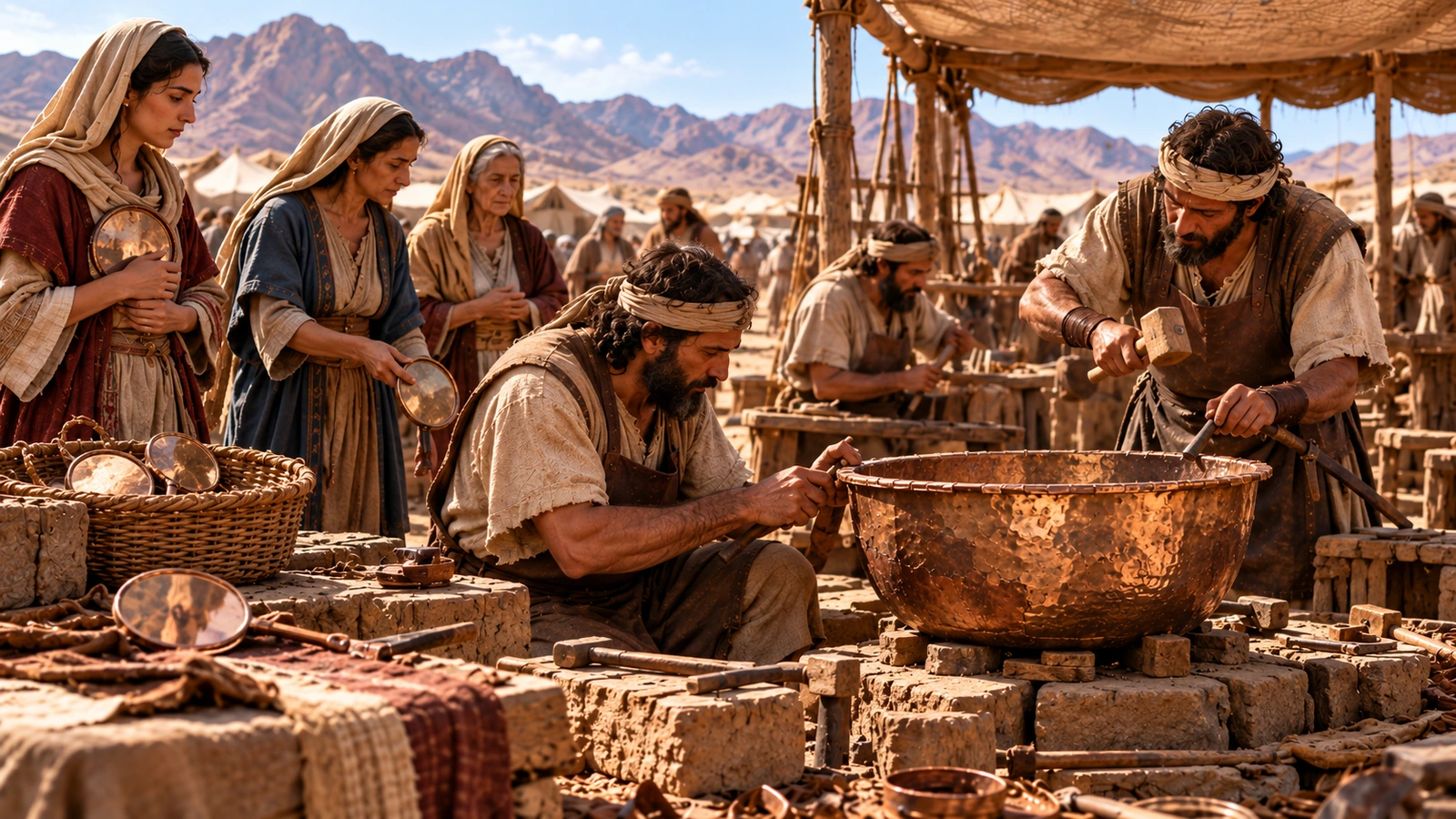
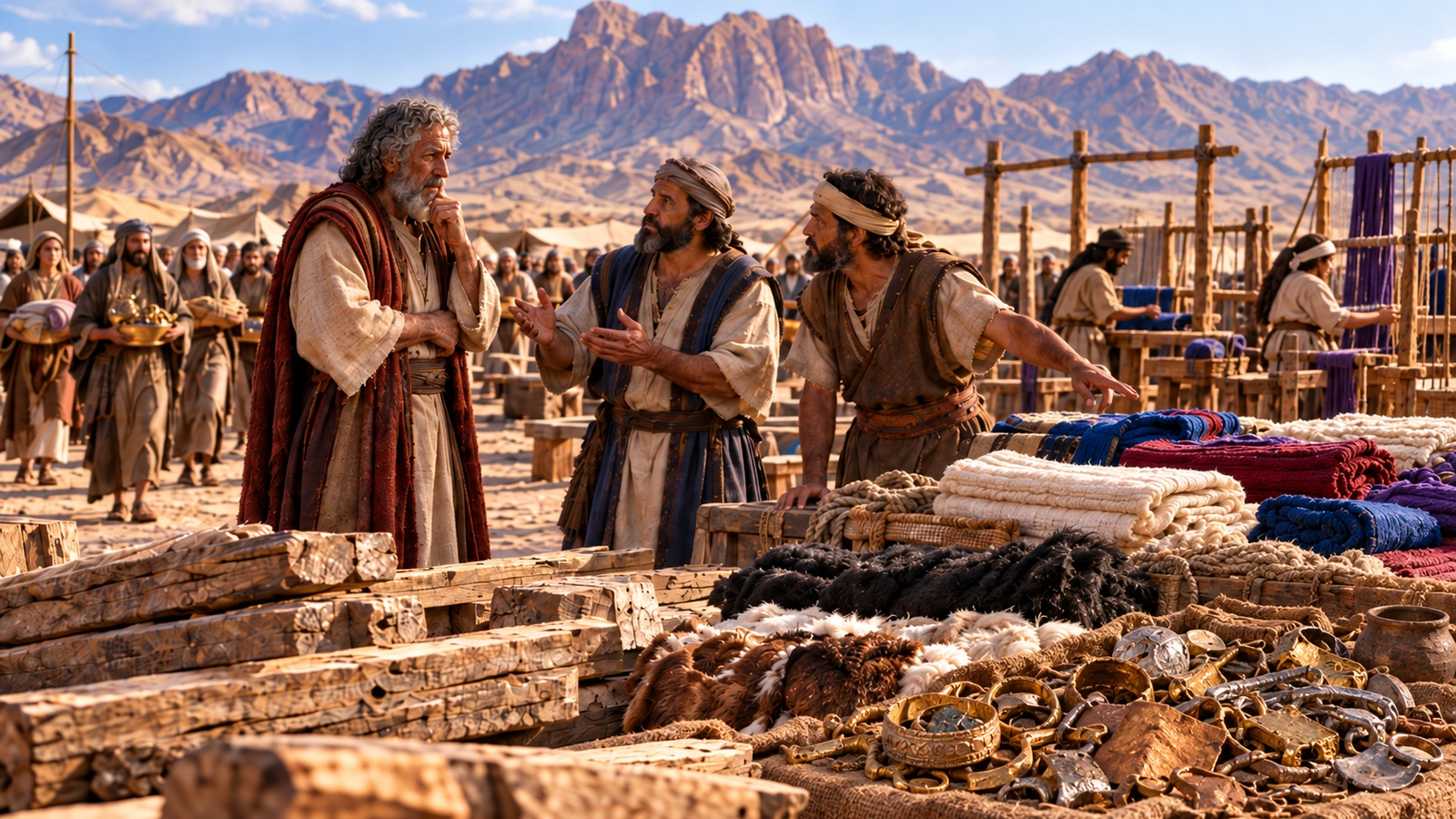
Figure 1. Artistic reconstruction of Leah holding the newborn Judah with her three older sons nearby, while Jacob remains in the background, representing the shift in Leah’s naming speech in Genesis 29:31–35. |
Jacob leaves Bethel carrying promises of protection, descendants, land, and eventual return.
That sacred geography was explored in Why Does Genesis Spend More Time on Bethel Than on Jacob’s Dream?
Haran replaces the solitary night with a crowded household.
Laban manipulates marriage arrangements, while Rachel becomes the woman Jacob openly loves.
Morning exposes the deception.
Yet Genesis 29 does not finish by examining the deceived husband.
Its attention moves toward the woman he never intended to marry.
Four sons arrive.
Each receives a name connected with a short explanation.
Those speeches seem repetitive until their wording is compared carefully.
Reuben begins with affliction and hoped-for affection.
Simeon introduces divine hearing.
Levi returns directly to marital attachment.
Judah breaks that sequence.
At his arrival, the explanation no longer ends with Jacob.
Instead, Leah says:
“This time I will praise YHWH.”
Why does that change happen?
The answer is subtler than a sudden spiritual transformation.
The Title Needs One Important Qualification
“Why Does Leah Stop Speaking About Jacob?” describes a local literary movement.
It does not mean she permanently stops caring about her husband.
Genesis 30 prevents that reading.
Later, the elder sister negotiates a night with him.
At Issachar’s arrival, she again mentions אִישִׁי — ʾîšî, “my husband.”
Zebulun produces an even clearer expectation.
She hopes her spouse will finally honor or dwell with her after six sons.
So Genesis 29:35 cannot prove complete emotional detachment.
Nor does the passage announce healed disappointment.
Something narrower happens.
Within the first four naming speeches, marital longing stops controlling the final explanation.
That observation is strong because the wording itself makes it visible.
The Problem Begins Before the First Child
Genesis 29:30 establishes an unequal marriage.
Jacob loves Rachel more than Leah.
The following verse describes the elder wife as:
שְׂנוּאָה — śənûʾâ
Older English versions often translate the adjective as “hated.”
Many modern renderings prefer “unloved” within this comparative setting.
Verse 30 provides the immediate relational context: Rachel receives greater affection.
Then YHWH sees the disadvantaged woman and opens her womb.
Rachel, meanwhile, remains unable to conceive.
The narrator now changes perspective.
Laban controlled the weddings.
Jacob expressed preference.
From verse 31 onward, divine attention and maternal speech dominate.
Reuben — Being Seen Does Not Yet Resolve the Marriage
The first child receives the name:
רְאוּבֵן — Rəʾûḇēn
Genesis connects that designation through wordplay with:
רָאָה — rāʾâ
“to see.”
Leah explains that YHWH has seen her עֳנִי — ʿŏnî, her affliction.
Then comes the expectation:
“Now my husband will love me.”
Divine sight matters, but marital affection remains the hoped-for result.
Her suffering has been noticed.
She still interprets the newborn through what his arrival might change at home.
Simeon — The Language Moves Toward Divine Hearing
A second child brings another verbal connection:
שִׁמְעוֹן — Šimʿôn
The explanation uses:
שָׁמַע — šāmaʿ
“to hear.”
This time she says YHWH heard that she was śənûʾâ.
The husband is not explicitly named in that sentence.
Yet the grievance remains relational.
Her condition as the less-favored wife still explains the gift.
A meaningful shift has begun.
The expected human response disappears, while divine perception becomes more prominent.
Levi — The Desire for Attachment Becomes Explicit Again
The third explanation returns directly to marriage.
His name is:
לֵוִי — Lēwî
The narrative places it beside:
יִלָּוֶה — yillāweh
The verb conveys joining or attachment in this context.
Her statement is unmistakable:
“Now this time my husband will become attached to me.”
Three sons appear to strengthen her expectation.
Quantity has become part of the reasoning.
Perhaps repeated motherhood will produce the closeness still missing from the household.
Yet the desired outcome remains outside her control.
Judah — One Phrase Changes Direction
The fourth child introduces the decisive contrast.
His name is:
יְהוּדָה — Yəhûḏâ
The accompanying verb is:
אוֹדֶה — ʾôḏeh
In this setting, it means “I will praise” or “I will give thanks.”
Her full statement begins:
הַפַּעַם אוֹדֶה אֶת־יְהוָה — happaʿam ʾôḏeh ʾeṯ-YHWH
“This time I will praise YHWH.”
No husband follows.
No prediction about affection appears.
Nothing mentions attachment.
The sentence terminates with YHWH as the object of her thanksgiving.
That difference supplies the article’s strongest textual evidence.
The Most Important Hebrew Detail Is “This Time”
A subtle repetition makes the transition sharper.
Levi’s explanation begins:
עַתָּה הַפַּעַם — ʿattâ happaʿam
“Now, this time…”
What follows?
“My husband will become attached to me.”
Judah’s explanation immediately reuses:
הַפַּעַם — happaʿam
“This time…”
Yet the sentence now ends differently:
“I will praise YHWH.”
The repeated expression creates an unusually clean literary contrast.
At Levi, “this time” points toward anticipated marital attachment.
At Judah, identical language turns toward thanksgiving.
The narrator never explains that change.
Hebrew syntax allows readers to hear it.
Are These Scientific Etymologies?
Care is required with biblical naming accounts.
Genesis frequently connects names with nearby sounds, verbs, or circumstances.
Such explanations often function through wordplay.
They should not automatically be treated as modern historical etymologies.
Reuben illustrates the problem well.
The narrative associates Rəʾûḇēn with YHWH “seeing” Leah’s distress.
That association contributes meaning inside the story.
It does not require every syllable to derive linguistically from rāʾâ.
The same caution applies to Levi and Judah.
Literary explanation and historical name formation are related questions, not identical ones.
Recent scholarship on biblical proper-name wordplay likewise recognizes Judah’s connection with y-d-h, the verbal field used for praise or thanksgiving.
Names Carried Meaning Across the Ancient Near East
The literary technique also belongs within a wider historical world.
Cuneiform archives preserve enormous numbers of personal names from Mesopotamia.
Akkadian onomastic research shows that names could carry religious, familial, and social information.
Regine Pruzsinszky’s survey demonstrates how seriously such evidence must be treated historically.
That comparison does not prove direct dependence.
Neither does it authenticate the patriarchal episode archaeologically.
Its value is contextual.
Ancient names could carry meaningful statements rather than functioning as arbitrary labels.
Genesis develops that cultural possibility with exceptional narrative artistry.
Each designation becomes part of the mother’s interpretation of her circumstances.
Does Judah Mark a Spiritual Conversion?
This interpretation is attractive.
It is also stronger than the evidence permits.
Some readers describe Judah’s naming as the moment his mother finally abandons human approval.
Others portray the sentence as complete emotional healing.
Genesis says neither.
No narrator announces a transformed heart.
Nothing declares that longing for marital affection has vanished.
Chapter 30 actually shows that those concerns return.
The safer literary claim is more interesting.
Her fourth naming speech suspends the previous marital logic.
For one moment, the explanation requires no predicted reaction from her spouse.
Praise itself becomes sufficient language.
The Circumstances Have Not Suddenly Improved
Nothing preceding Judah’s arrival reports increased affection.
Rachel remains the preferred wife.
No reconciliation scene appears.
Laban has not repaired the damage created by his deception.
The household structure remains unequal.
Yet the verbal pattern changes before the external situation does.
That distinction matters.
A shift in speech does not require us to invent a change in psychology.
The text gives readers words.
Interpretation must begin there.
Judah’s Later Importance Should Not Be Read Backward Too Quickly
Future chapters will make Judah enormously significant.
His descendants will occupy a major place within Israel’s history.
Genesis 49 eventually gives him extraordinary prominence among Jacob’s sons.
Those later developments can enrich a canonical reading.
They do not explain Leah’s motive in Genesis 29.
The passage never says she chooses this name because kings will descend from him.
Nor does it mention later messianic interpretation.
At this point, the textual connection is simple.
A mother praises YHWH.
Her fourth son receives a name linked with that declaration.
What Does the Passage Explicitly Establish?
Several observations come directly from Genesis 29.
YHWH sees Leah’s disadvantaged marital position.
Her womb opens.
Four sons follow.
Each receives an explanatory naming statement.
Reuben connects divine sight with hoped-for affection.
Simeon emphasizes divine hearing amid rejection.
Levi expresses anticipated attachment.
Judah ends with praise directed toward YHWH.
Those points require no reconstruction of hidden motives.
They are visible in the sequence itself.
What Can Reasonably Be Inferred?
A strong literary inference follows.
The first four explanations do not remain static.
Their center of gravity moves.
Early language repeatedly interprets motherhood through relational deprivation.
The fourth formula no longer predicts what a child might change between spouses.
Instead, its verbal energy terminates in thanksgiving.
That is enough to explain why the ending feels different.
No theory of complete spiritual liberation is necessary.
What Should We Refuse to Claim?
The passage never states that Leah stopped loving Jacob.
It does not say she abandoned hope for his affection.
Neither does it explain Judah’s conception as a reward for greater faith.
Later behavior rules out an irreversible emotional break.
Genesis 30 returns explicitly to marriage, fertility competition, mandrakes, and negotiated access.
Any reading that makes Genesis 29:35 final must reckon with what follows.
Academic restraint strengthens the discovery rather than weakening it.
The Deeper Discovery
The title asks why Leah stops speaking about Jacob.
Closer examination changes the question.
She does not permanently stop.
Instead, Jacob stops determining the final explanation within this four-son sequence.
That distinction is more precise and more revealing.
Reuben imagines love.
Simeon interprets rejection through divine hearing.
Levi hopes for attachment.
Judah requires no forecast about marital improvement.
The final declaration simply praises YHWH.
Its power comes from what disappears.
No narrator tells us what happened internally.
No psychological monologue follows.
One absent reference carries the literary weight.
Yet chapter 30 refuses to leave the family in that moment of stillness.
Rachel becomes desperate for children.
Bilhah enters the reproductive struggle.
Zilpah follows.
Mandrakes become bargaining material.
Leah negotiates access to her own husband.
Jacob later uses an elaborate breeding strategy among Laban’s flocks.
Human planning fills almost every scene.
Still, the account repeatedly redirects decisive outcomes beyond those strategies.
That creates the next mystery:
Why Does Genesis 30 Keep Redirecting the Outcome Back to God?
Selected Sources
Alter, Robert. The Art of Biblical Narrative. Basic Books.
Hamilton, Victor P. The Book of Genesis: Chapters 18–50. Eerdmans.
Jeffay, Elisheva. “Proper Names as Predicates in Biblical Hebrew.” In New Perspectives in Biblical and Rabbinic Hebrew, 145–166. Open Book Publishers, 2021. DOI: 10.11647/OBP.0250.07.
Mathews, Kenneth A. Genesis 11:27–50:26. B&H.
Pruzsinszky, Regine. “A History of Akkadian Onomastics.” In Juan-Pablo Vita, ed., History of the Akkadian Language, 477–510. Brill, 2021.
Reece, Steve. Wordplay on Proper Names in Luke-Acts. Brill, 2025.
Sarna, Nahum M. Genesis. Jewish Publication Society.
Wenham, Gordon J. Genesis 16–50. Word Biblical Commentary.