Why Did Joseph Put the Silver Cup in Benjamin’s Sack?
Genesis 44 Explained: Joseph’s Silver Cup, Benjamin’s Arrest, Judah’s Offer, and the Final Crisis Before Recognition
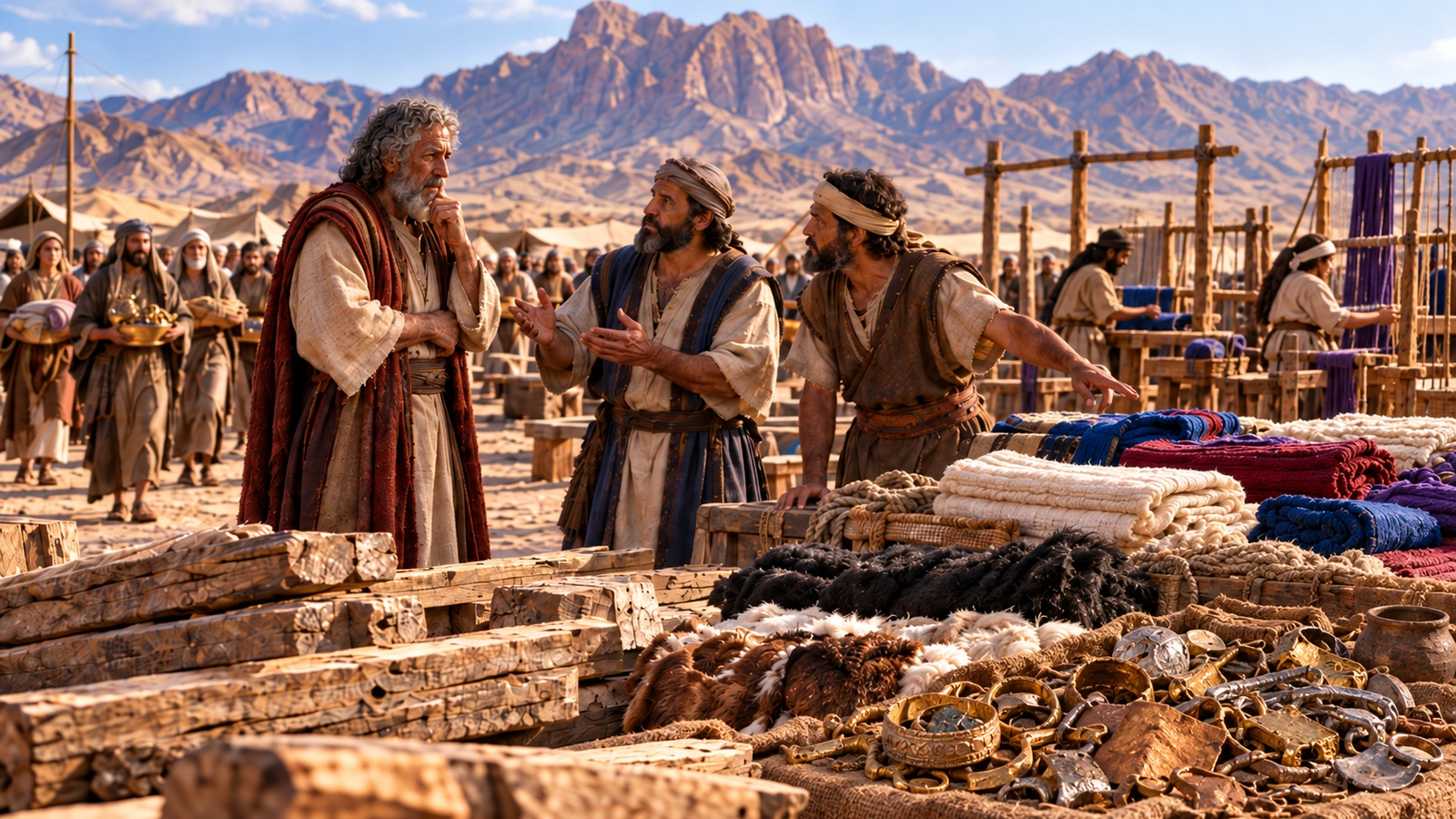
Figure 1. Artistic reconstruction of Judah approaching Joseph and offering himself as a servant in Benjamin’s place while the recovered silver cup rests nearby, representing Genesis 44:18–34.
Source: AI-generated image created for Beyond The Known.

Figure 1. Artistic reconstruction of Judah approaching Joseph and offering himself as a servant in Benjamin’s place while the recovered silver cup rests nearby, representing Genesis 44:18–34.
Source: AI-generated image created for Beyond The Known.
Why Does Joseph Give Benjamin Five Times More Food? ended with unequal honor returning to Jacob’s family.
Benjamin received the largest portion, yet no conflict followed.
By morning, the brothers leave Egypt believing the danger has passed.
Joseph then orders one final, disturbing act.
His silver cup must be hidden inside Benjamin’s sack.
The youngest brother is innocent.
Joseph knows where the vessel will be found.
So the chapter’s mystery is not the thief’s identity.
It is why Benjamin must appear guilty.
Genesis never gives Joseph a private speech explaining his motive.
Instead, the account shows what his arrangement makes possible.
One favored son can be left behind.
Everyone else can go home.
That choice reaches directly into the family’s buried past.
The Evidence Is Planted Before Dawn
Genesis 44 opens without suspense for the audience.
Joseph commands his household steward to refill every grain sack.
Each man’s money is returned again.
Then comes an additional order:
גְּבִיעִי גְּבִיעַ הַכֶּסֶף — gəḇîʿî, gəḇîaʿ hakkesep̄
“my cup, the silver cup.”
It goes into the youngest brother’s bag.
The steward obeys.
Readers already know Benjamin never stole anything.
That knowledge changes every accusation that follows.
The investigation is staged from its first moment.
Why Silver Matters in Egyptian Material Culture
Silver was not an ordinary material in ancient Egypt.
It survives less frequently than gold or copper alloys.
Egypt also possessed limited indigenous silver resources.
Much was probably imported from neighboring regions.
Middle Kingdom burials still preserve elite objects made from this precious metal.
Drinking vessels are equally familiar within Egyptian material culture.
The Metropolitan Museum preserves Middle Kingdom cups excavated at Lisht.
Those examples are faience rather than Joseph’s precious vessel.
A later Dynasty 18 silver cup survives from Thebes.
Its date cannot establish when the Joseph account occurred.
Still, precious-metal drinking vessels fit Egyptian elite material culture.
Archaeology provides context here.
It does not verify Joseph’s cup.
No excavated object can be connected with Genesis 44.
The Steward Adds Divination to the Accusation
Joseph does not frame the missing vessel as ordinary property.
His steward describes it as something used for divination.
Genesis 44:5 reads:
נַחֵשׁ יְנַחֵשׁ — naḥēš yənaḥēš
The doubled verbal construction emphasizes the act of divining.
Joseph later invokes similar language before the brothers.
That statement creates another problem.
Did he genuinely practice divination?
Genesis never depicts him performing such a ritual.
Earlier revelations involve dreams whose interpretation belongs to God.
Here, the claim appears inside an encounter Joseph has deliberately constructed.
Older interpreters often reconstructed some form of “hydromancy.”
Such explanations depend heavily upon comparative material and later descriptions.
The Hebrew supplies no procedure.
We cannot securely reconstruct an Egyptian cup ritual from this verse.
One point remains clear.
The brothers are supposed to regard the object as exceptionally important.
The Search Must End With Benjamin
The travelers protest their innocence.
They remind the steward that they returned the earlier silver.
Then they make a reckless declaration.
Whoever possesses the cup may die.
Everyone else will become Joseph’s servants.
The steward immediately softens those terms.
Only the person possessing the object will remain enslaved.
Everyone else will be innocent.
That modification matters.
The coming crisis will isolate Benjamin.
Next, the search begins with the eldest.
It finishes with the youngest.
The cup appears exactly where Joseph ordered it placed.
No surprise exists for the audience.
Shock belongs entirely to the brothers.
The Brothers Turn Back Together
Genesis 44:13 records their response:
וַיִּקְרְעוּ שִׂמְלֹתָם — wayyiqrəʿû śimlōṯām
“They tore their garments.”
Every man then reloads his donkey.
All return to the city.
That collective movement deserves attention.
Benjamin alone is threatened by the evidence.
Yet nobody continues toward Canaan.
Genesis 37 ended differently.
Joseph disappeared while his brothers returned home without him.
Now the endangered son is not abandoned.
His family goes back with him.
The comparison is strong.
Still, the decisive reversal has not happened yet.
Judah Says God Has “Found” Their Guilt
Back before Joseph, everyone falls to the ground.
Judah speaks.
He does not defend Benjamin’s innocence.
Instead, he asks:
“What can we say to my lord?”
Then comes a startling admission:
הָאֱלֹהִים מָצָא אֶת־עֲוֹן עֲבָדֶיךָ — hāʾĕlōhîm māṣāʾ ʾeṯ-ʿăwōn ʿăḇāḏeḵā
“God has found the iniquity of your servants.”
The statement reaches beyond cup theft.
Benjamin did not steal Joseph’s property.
Readers know the accusation is manufactured.
Judah’s language may point toward older culpability.
Genesis 42 already linked their distress with Joseph’s suffering.
Chapter 44 now places divine exposure beside another false charge.
The earlier crime remains unnamed.
It does not need to be stated again.
One Hebrew Root Changes the Scene
A subtle word pattern sharpens the entire episode.
The cup is found inside Benjamin’s sack.
Judah says God has found their iniquity.
Both expressions come from:
מצא — m-ṣ-ʾ
The object is discovered physically.
Their earlier guilt is experienced as morally exposed.
Joseph knows the first discovery was manufactured.
Judah interprets the second as divine judgment.
That contrast redirects attention away from stolen property.
A planted object becomes the trigger for remembered culpability.
Genesis has transformed the language of evidence.
What appears to expose Benjamin instead exposes the brothers’ past.
Joseph Gives Them a Way Out
Judah initially offers everyone as Joseph’s servants.
Joseph refuses.
His ruling narrows the sentence again.
Only Benjamin will remain.
The others may:
עֲלוּ לְשָׁלוֹם אֶל־אֲבִיכֶם — ʿălû ləšālôm ʾel-ʾăḇîḵem
“go up in peace to your father.”
The offer creates the chapter’s sharpest choice.
Nine brothers can leave Egypt.
Benjamin alone can stay.
No external command forces them to share his fate.
For anyone remembering Genesis 37, the resemblance becomes difficult to miss.
Another son of Rachel can disappear.
The others can preserve themselves.
Does Genesis Explicitly Call This a Repentance Test?
No.
That distinction must remain clear.
Joseph never says:
“I will recreate the past and test their repentance.”
The narrator supplies no equivalent statement.
What Genesis provides is a carefully arranged sequence.
Benjamin receives conspicuous favor in chapter 43.
The planted goblet isolates him in chapter 44.
Everyone else receives permission to leave.
Judah then offers himself instead.
That pattern strongly supports a test-of-loyalty interpretation.
Joseph’s complete private reasoning remains unstated.
We can identify the mechanism without inventing his inner monologue.
Judah Steps Forward
Genesis 44:18 changes the direction of the encounter.
וַיִּגַּשׁ אֵלָיו יְהוּדָה — wayyiggaš ʾēlāyw Yəhûḏāh
“Then Judah approached him.”
He addresses a ruler holding enormous authority over his family.
His appeal extends through Genesis 44:34.
It is the longest sustained speech in Genesis.
Length alone does not explain its power.
Its subject does.
Judah barely talks about the cup.
He talks about Jacob.
The Cup Vanishes From Judah’s Argument
Judah reconstructs the family’s recent history.
An aged father has a youngest son.
That child once had a brother.
The missing sibling is presumed dead.
Jacob’s life is now bound to Benjamin’s.
If the youngest does not return, grief may destroy their father.
Notice what Judah refuses to emphasize.
He develops no theory about the evidence.
Neither does he challenge Egyptian legal procedure.
The immediate case appears hopeless.
His appeal moves elsewhere.
What will Benjamin’s loss do to Jacob?
Judah Now Accepts the Favoritism He Once Resented
One statement deserves special attention.
Judah tells Joseph that Jacob loves Benjamin.
The family’s unequal affection is openly acknowledged.
Years earlier, Jacob’s preference for Joseph contributed to hatred.
Now Judah uses paternal attachment as grounds for mercy.
He does not demand equal treatment.
No resentment enters his argument.
Instead, Judah protects the son carrying that preference.
That behavior carries more weight than a verbal apology.
His actions now run against the old family pattern.
The Guarantee Becomes Costly
Before leaving Canaan, Judah guaranteed Benjamin’s safety.
Genesis 43:9 presented that commitment personally.
Now he reminds Joseph of the pledge.
Failure to return Benjamin will leave Judah guilty before Jacob.
The guarantee is no longer rhetoric.
Egypt has made fulfillment expensive.
Keeping his word may require losing freedom.
That is precisely what Judah offers.
“Let Your Servant Remain Instead of the Boy”
Genesis 44:33 contains the decisive reversal:
יֵשֶׁב־נָא עַבְדְּךָ תַּחַת הַנַּעַר — yēšeḇ-nāʾ ʿaḇdəḵā taḥaṯ hannaʿar
“Please let your servant remain instead of the boy.”
The key term is:
תַּחַת — taḥaṯ
“instead of,” “in place of,” or “under.”
Judah proposes substitution.
He will become Joseph’s servant.
Benjamin may return with his brothers.
That reversal is extraordinary.
Genesis 37:26–27 showed Judah proposing Joseph’s sale.
Genesis 44:33 shows him accepting slavery himself.
No invented emotional explanation is required.
His behavior has changed.
Judah’s Reversal Extends Beyond Benjamin
The speech repeatedly returns to Jacob’s suffering.
That widens the significance of Judah’s action.
Protecting Benjamin matters.
Preventing another catastrophe for his father matters too.
Genesis 37 showed the brothers helping create Jacob’s grief.
Joseph’s bloodied garment became evidence supporting their deception.
Chapter 44 places Judah before another possible loss.
This time, he refuses to accept the outcome.
His final concern is not personal survival.
He asks how he could face Jacob without Benjamin.
The Object Has Finished Its Work
By verse 33, the silver vessel has become almost irrelevant.
Nobody needs to discover its real owner.
Joseph knows.
The steward knows.
Readers know.
Only one uncertainty remains.
How far will Judah go?
The planted evidence provided a pretext for detaining Benjamin alone.
Joseph’s ruling removed every obstacle to everyone else leaving.
Judah rejects that escape.
Earlier chapters produced admissions of guilt.
Genesis 44 produces costly behavior.
The distinction matters.
Words can describe remorse.
Actions reveal what someone chooses when the old danger returns.
The Banquet Was Only the Rehearsal
Genesis 43 offered a lower-pressure situation.
Benjamin received exceptional honor.
No visible hostility followed.
That scene was suggestive.
It was not decisive.
A larger serving costs his brothers nothing.
Losing freedom does.
Chapter 44 raises the price.
Now loyalty requires someone to remain in Egypt.
Judah volunteers.
The movement from banquet to servitude changes the evidence completely.
Silence at a table suggested something had changed.
Self-sacrifice demonstrates much more.
Have All the Brothers Changed?
Not in identical ways.
Genesis does not provide ten equal character studies.
Judah receives the decisive speech.
The group’s collective return still matters.
Every brother turns back after Benjamin is implicated.
Yet only Judah offers himself as substitute.
Those distinctions should remain visible.
The chapter demonstrates corporate solidarity and individual leadership.
It does not narrate ten separate transformations.
Why Benjamin, Not Another Brother?
Joseph could have planted the cup elsewhere.
The chapter never explains his selection directly.
Still, the literary logic is unusually strong.
Benjamin is Rachel’s remaining son.
Jacob cannot bear to lose him.
Chapter 43 has just marked him with exceptional favor.
Detaining another brother would not reproduce those conditions.
Benjamin concentrates the family’s old tensions into one person.
That makes his role narratively exact.
The inference is strong.
The motive remains unstated.
The Deeper Discovery
The chapter’s deepest reversal may hide inside the verb “find.”
First, Joseph arranges for a cup to be found.
Then Judah says God has found their iniquity.
Finally, Joseph sentences the man possessing the found vessel.
One Hebrew root connects evidence, guilt, and judgment.
Yet the physical evidence is false.
The moral exposure is real.
That is the chapter’s sharpest irony.
Benjamin appears guilty but is innocent.
His brothers are innocent of theft but carry older culpability.
Joseph’s arrangement does not discover a criminal.
It creates circumstances where unresolved history becomes visible through behavior.
Judah responds without knowing Joseph’s identity.
That detail gives his offer unusual weight.
He cannot perform repentance for the brother he injured.
As far as Judah knows, an Egyptian ruler stands before him.
Years earlier, self-preservation helped send Joseph into slavery.
Now Judah accepts possible enslavement to save Benjamin.
Genesis never needs to announce transformation abstractly.
Changed conduct appears when comparable pressure returns.
That is why the silver cup matters.
Its disappearance never creates a mystery for the audience.
Readers know its location from verse 2.
Within the plot, the vessel isolates Benjamin and forces a choice.
Once Judah makes that choice, Joseph reaches his emotional limit.
Genesis 45 begins with him unable to restrain himself.
The hidden brother is finally about to speak.
Yet his first explanation creates an even larger problem.
Joseph tells the men who sold him something astonishing about responsibility and providence:
Why Does Joseph Say, “It Was Not You Who Sent Me Here, But God?
Selected Sources
- Gordon J. Wenham, Genesis 16–50, Word Biblical Commentary.
- Victor P. Hamilton, The Book of Genesis: Chapters 18–50, Eerdmans.
- Nahum M. Sarna, The JPS Torah Commentary: Genesis, Jewish Publication Society.
- Robert Alter, The Hebrew Bible: A Translation with Commentary, W. W. Norton.
- Kenneth A. Mathews, Genesis 11:27–50:26, New American Commentary.
- Claus Westermann, Genesis 37–50: A Commentary.
- Donald B. Redford, A Study of the Biblical Story of Joseph (Genesis 37–50), Brill.
- Deborah Schorsch, “Silver in Ancient Egypt,” Heilbrunn Timeline of Art History, The Metropolitan Museum of Art.